A normal ChatGPT chat forgets you the moment you close it. Workspace agents don’t: they keep the context of a project, connect to your apps, and can run on a schedule without being asked. That makes them good for standing jobs that matter but never happen because nobody remembers to do them. I’ll skip the feature list. Here are three jobs worth handing over.
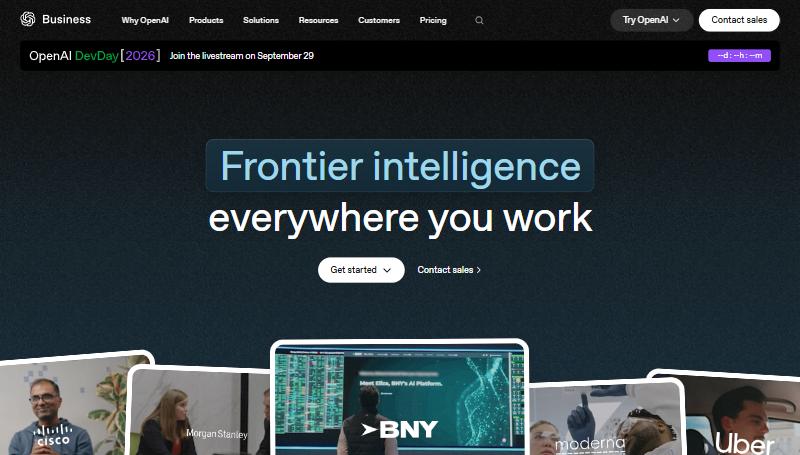
Image: OpenAI, from the official OpenAI announcement
Play 1: Watch for tenders and requests for quote
The money: public tenders and requests for quote in your field that close before you hear about them.
How I’d run it:
- Create an agent with a clear brief: the products and services you supply, the regions you cover, and the job sizes you want.
- Schedule it weekly: “Search for new tenders, RFQs and public procurement notices matching our brief, published in the last 7 days. For each, give the closing date, the buyer, the scope and the link.”
- Someone spends 15 minutes each Monday deciding which to pursue.
The maths, as an example: if the agent finds one extra tender a quarter worth bidding, you win one in four, and they average $80k, that’s about $80k a year from a weekly 15 minutes.
Play 2: Know what competitors are doing before your customers tell you
The money: deals lost because a competitor changed their offer and you found out from the customer, too late.
How I’d run it:
- Give the agent your three main competitors.
- Schedule a fortnightly check: “What have these companies announced, launched, priced or changed in the last two weeks? Only include things with a source.”
- Read it before your sales meeting. If something matters, decide your answer before a customer asks.
Play 3: Prepare every big-account review with an upsell in mind
The money: existing customers who would buy more, but nobody looks at the whole account before the quarterly catch-up.
How I’d run it: keep one agent per key account, connected to your files. Before each review, ask: “What has this customer bought, what problems have they mentioned, and what haven’t we offered them yet?” Because it remembers the account from last quarter, the answer gets better every time.
How I’d actually do it
Start with Play 1. Tenders are real money with real deadlines, and they’re exactly the kind of thing that slips when nobody owns the job of looking.
The caveat: workspace agents are on ChatGPT Business, Enterprise, Edu and Teachers plans only. Start with one narrow scheduled job and watch it for a few weeks before giving it anything important. OpenAI’s “superapp” ambitions are big; reliable results come from small, specific briefs.
Where this fits
For similar standing jobs inside your own documents, see Claude’s desktop agent. For one-off deep research, see Perplexity Deep Research. For the general rule on which sales jobs suit AI, see Where AI Actually Helps a B2B Sales Pipeline.
What shipped, for reference: ChatGPT workspace agents are available on Business, Enterprise, Edu and Teachers plans. They keep context across a project, connect to external apps, and can run on a schedule or a trigger without being prompted each time.
Source: OpenAI.