The difference between a first call that goes somewhere and one that doesn’t is usually ten minutes of homework. Most salespeople skip it because ten minutes becomes an hour. Perplexity’s Deep Research does that hour in a few minutes and cites every claim, so you can check it. I’ll skip the product description. Here are three plays.
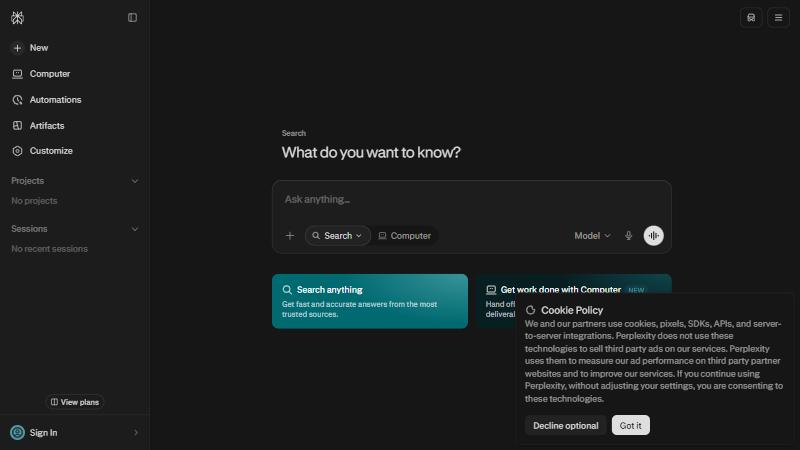
Image: Perplexity, from the official Perplexity website
Play 1: Turn every first call into a second meeting
The money: first meetings that don’t lead anywhere because you spent them asking questions you could have answered beforehand.
How I’d run it:
- The day before a first call, run Deep Research with this prompt: “Brief me on [company] for a sales meeting about [your product area]. What do they make, where are their sites, any expansion, new contracts, leadership changes or problems in the last 12 months? Cite sources.”
- Check the two or three claims you plan to mention against their sources.
- Open the call with one of them: “I saw you’re adding a second line in Dandenong. Is that what’s driving this?” You’ll sound like you’ve done the work, because you have.
The maths, as an example: if better-prepared first calls turn even one extra prospect a month into a quote, at a 30% win rate and a $25k average job, that’s about $90k a year from homework.
Play 2: Give outbound a real reason to call
The money: outbound that gets ignored because the opener is generic.
How I’d run it:
- Pick 20 target companies.
- Ask: “For each of these companies, find one specific, recent, sourced fact relevant to [your problem area].”
- Write the first line of each email from that fact. If there isn’t a fact, don’t email them yet.
Play 3: Price the quote with the market in view
The money: jobs lost on price because you didn’t know what alternatives the customer was weighing, or margin given away because you didn’t know you were the only serious option.
How I’d run it: before a big quote, ask Deep Research what competing products and approaches exist for the customer’s problem, with rough price ranges where they’re published. It won’t give you a competitor’s private quote, but knowing the public market stops you guessing. On Enterprise plans it can also search your own Drive or SharePoint, so ask it to pull your last three quotes for similar jobs at the same time.
How I’d actually do it
Start with Play 1. It’s the habit with the best return for the least effort, and you’ll feel the difference on the very next call. Play 2 only works once you’ve done Play 1 enough to recognise a good fact when you see one.
The caveat: Perplexity tells you about the outside world, not about your own pipeline. Good research doesn’t replace a CRM record nobody updates. And check the sources you quote. A wrong “fact” in an opener is worse than no fact at all.
Where this fits
For enriching a whole list rather than briefing one account, Clay is the better tool. Once the deal is in the pipeline, keeping it moving is a different problem, the one CRM Pipeline Rescue solves.
What shipped, for reference: Perplexity Deep Research searches, reads and writes a cited report in minutes. Enterprise plans add connectors to Google Drive, SharePoint, Gmail and Slack, so reports can mix public information with your own files.
Source: Perplexity.