Apollo.io vs HubSpot for B2B Prospecting (2026)
Apollo.io and HubSpot solve different problems — but they overlap on sequences, email, and contact management enough that teams often wonder if they need both. Here’s the honest breakdown.
FREE RESOURCE
Get the Free CRM Setup Checklist
The exact steps small B2B teams use to configure a CRM that reps actually use.
The Core Difference
Apollo is a prospecting and outreach platform: it finds contacts, verifies emails, and runs cold outreach sequences. HubSpot is a CRM and marketing platform: it manages your pipeline, tracks deals, and runs warm nurture sequences. Apollo’s contact database (275M+ contacts) has no equivalent in HubSpot. HubSpot’s CRM and deal management has no equivalent in Apollo.
Many serious B2B sales teams use both: Apollo for finding and initially contacting prospects, HubSpot for managing deals once there’s engagement. The question is whether you need both or can get away with one.
Who This Is For
Outbound-heavy B2B sales teams of 2–50 reps who do cold prospecting and need to decide whether Apollo replaces HubSpot, complements it, or vice versa.
Best Choice by Use Case
Apollo only if…
You’re a small team (1–5 reps) doing pure outbound with a tight budget and don’t need robust deal management, forecasting, or marketing features. Apollo’s CRM is functional but not its strength.
HubSpot only if…
Most of your leads come inbound or via referral and you don’t need a prospecting database. HubSpot Sequences handle warm follow-up sequences well without Apollo’s data.
Both if…
You do significant outbound prospecting AND have a deal management and reporting need beyond what Apollo provides. The two tools integrate and work well together.
Common Mistakes
- Using Apollo as your CRM of record. Apollo’s CRM is for prospecting, not deal management. Use it for outbound, then move engaged prospects to HubSpot where you can track the full sale.
- Running sequences in both tools simultaneously. Pick one tool for sequences and route all outreach through it. Duplicating sequences across both creates confusion and risks double-contacting prospects.
RECOMMENDED TOOL
Try Apollo.io Free
275M+ B2B contacts, email sequences, and outreach — all in one platform. No credit card required to start.
Related Reading
Feature Comparison: What Each Tool Does Well
| Feature | Apollo.io | HubSpot |
|---|---|---|
| Contact database | ✅ 275M+ verified B2B contacts | ❌ No prospecting database |
| Email sequences | ✅ Built-in, cold outreach focused | ✅ Marketing & sales sequences |
| CRM pipeline | ⚠️ Basic (adequate but not primary) | ✅ Full CRM with deals & contacts |
| Marketing automation | ❌ Not its strength | ✅ Core capability |
| Reporting | ✅ Outreach analytics, reply rates | ✅ Full funnel reporting |
| Starting price | Free / $49/user/month | Free / $90/user/month |
Do You Need Both?
This is the real question most people are asking when they compare Apollo.io and HubSpot. The short answer: yes, for outbound-heavy B2B teams, both tools serve different jobs.
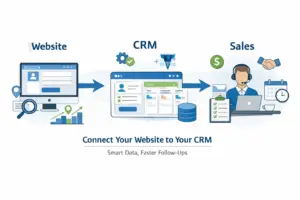
Apollo.io fills the top of your funnel — finding verified contacts, running cold email campaigns, booking meetings. HubSpot manages those meetings and deals once they’re in play, tracks pipeline stage, and handles follow-up automation.
The good news: Apollo.io integrates natively with HubSpot. Contacts enrolled in Apollo sequences can be synced to HubSpot deals automatically. Many B2B teams run this combination — Apollo for prospecting, HubSpot (or Pipedrive) for deal management.
When Apollo.io Replaces HubSpot
For smaller teams under 10 people doing purely outbound sales, Apollo.io’s built-in CRM is often enough to manage a modest pipeline without paying for HubSpot. Apollo tracks contacts, deals, and conversation history at a fraction of HubSpot’s Professional pricing.
If your sales motion is simple — prospect, pitch, close, move on — Apollo.io alone works. Once you add nurture sequences, marketing content, inbound leads, and multi-touch attribution, you’ll feel the gaps and want a full CRM alongside it.
Pricing Reality
Apollo.io’s free plan gives you 50 email credits/month — useful for testing but not for scale. The Basic plan ($49/user/month) includes unlimited email sequences and 10,000 credits. HubSpot’s Sales Hub Professional runs $90/user/month.
Running both at Professional/Basic tier for a 3-person team: approximately $420/month. That’s real money — but for teams where outbound is the primary revenue driver, the ROI case closes fast if even one deal per month is attributable to the stack.
↑ Part of the BD Toolkit — see the B2B tech stack.
Pricing detail for both tools: Apollo.io pricing 2026 and HubSpot free CRM limits 2026.