Meetings cost money twice: once for everyone’s time, and again for what gets forgotten afterwards. Notion’s AI Meeting Notes now transcribes, summarises and pulls out action items, and it knows who said what. I’ll skip the feature list. Here are three plays where that saves or makes real money.
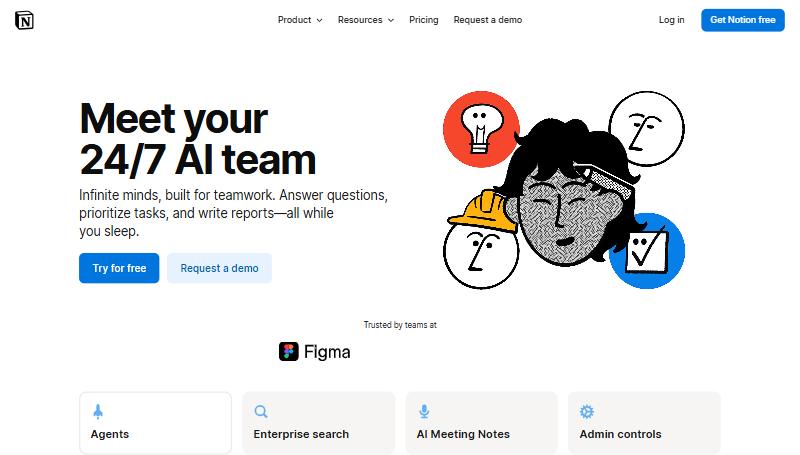
Image: Notion, from the official Notion AI page
Play 1: Make sure every promise to a customer has an owner
The money: things promised to a customer in a meeting that nobody does, because everyone assumed someone else would.
How I’d run it:
- Run AI Meeting Notes on every customer call and internal deal review.
- Because it identifies speakers, the action items say who said they’d do what. Check that list in the last two minutes of the meeting, out loud: “So, Sam sends the revised drawing by Thursday?”
- Anything without a name and a date gets one before people leave.
Play 2: Push meeting actions into the CRM automatically
The money: deals that stall because the follow-up lived in someone’s notes, not in the system everyone checks.
How I’d run it:
- Set up a Notion Custom Agent that runs after each customer meeting (or daily).
- Have it take the action items from that day’s meeting notes and, through its HubSpot connection, add each one as a task on the matching deal.
- Have someone check the first fortnight of tasks to make sure they’re landing on the right deals.
Play 3: Bill for the scope changes agreed in meetings
The money: variations and extras agreed verbally in project or site meetings that never get invoiced. In technical businesses this is often the biggest margin leak of all.
How I’d run it:
- Add one line to every project meeting’s agenda: “Anything we’ve agreed today that’s outside the original scope?”
- Ask Notion afterwards: “From these meeting notes, list anything the customer asked for that wasn’t in the original order, with who asked and when.”
- Send a variation confirmation the same day.
The maths, as an example: if a project team lets $2,000 of unbilled extras slip on each of 25 projects a year, that’s $50,000 of work done for free. Catching half of it pays for Notion many times over.
How I’d actually do it
Start with Play 3 if you run projects or installations; it’s the most direct money. Otherwise start with Play 1, which costs nothing but two minutes at the end of each meeting.
The caveat: full access needs Notion’s Business plan (about $20 per member per month). And the real test isn’t whether the transcript is accurate. It’s whether people trust the summary enough to stop taking their own notes. That trust takes a few meetings to earn.
Where this fits
Pipedrive Nova does the same job for sales calls inside Pipedrive. A summary is only worth something if its actions land in the system that tracks the deal; making sure they do is part of CRM Pipeline Rescue.
What shipped, for reference: Notion AI Meeting Notes transcribes, summarises and extracts action items in 16 languages, runs in the background (including on a locked phone) and now identifies speakers. Notion also offers personal agents and Custom Agents that run on a schedule or trigger and connect to tools such as HubSpot and Slack via MCP. Full access on the Business plan.
Source: Notion.