If you run Salesforce, you’re paying for a very good filing cabinet. The money isn’t in the filing; it’s in noticing what the records say before it’s too late. Claudeforce puts Claude on top of your Salesforce data and has it brief you. It’s still in pilot, so I’m not going to sell you a feature list. Here’s what I’d do with it the day it’s switched on.
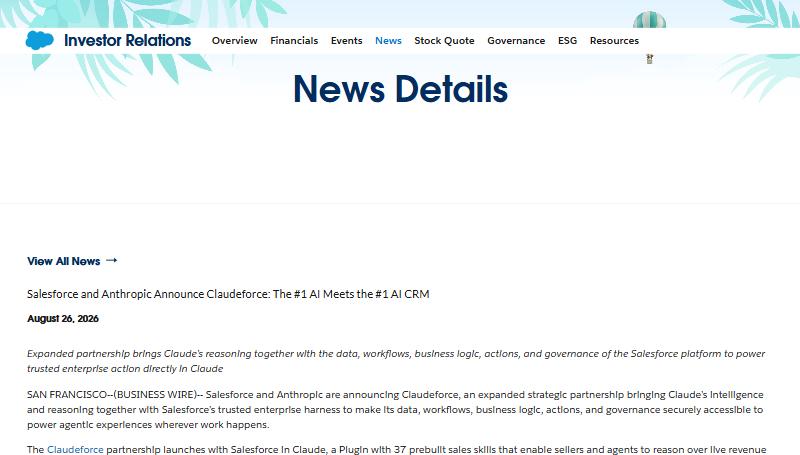
Image: Salesforce, from the official Salesforce announcement
Play 1: Rescue the at-risk deals before month end
The money: big deals that are quietly slipping: no next meeting booked, the champion hasn’t replied, the close date keeps moving.
How I’d run it:
- Every Monday, run the deal-health skill across your top 20 open opportunities.
- For each deal flagged as at risk, ask: “What’s the single thing missing on this deal: a decision maker, a next meeting, or an answer we owe them?”
- Assign one action per deal, with a date. Review the same list next Monday.
The maths, as an example: if your top 20 deals average $80k and the review saves one deal a quarter that would otherwise have slipped, that’s $80k a quarter from a Monday habit.
Play 2: Walk into every account meeting with an upsell question
The money: existing customers who would buy more if anyone asked the right question at the right time.
How I’d run it:
- Before each meeting with an existing customer, run meeting prep.
- Then ask: “Based on this account’s history, what have they bought, what have they asked about but not bought, and what have similar customers added?”
- Pick one question to ask in the meeting. One, not a pitch deck.
Play 3: Make the forecast number honest
The money: decisions made on a forecast padded with deals everyone privately knows are dead.
How I’d run it: before the forecast call, run the pipeline-review skill and ask it to list every deal in the commit number with no customer activity in 30 days. Each one either gets a real update from its owner or comes out of commit. A smaller, honest number is worth more than a big one nobody believes.
How I’d actually do it
Start with Play 1. It protects money you’re already counting on and makes the value of the tool obvious within a month. Play 3 is the one your finance team will thank you for.
The caveat is timing: Claudeforce is in pilot, with open beta expected around now and no published pricing. It also assumes you’re running Salesforce with Data 360 and AIforce in place. If you’re not, every one of these plays still works with a Salesforce report and an hour on a Monday. Claude makes it faster, it doesn’t make it possible.
Where this fits
The HubSpot version of the same idea is Claude inside HubSpot. Salesforce’s own agent platform is covered in Agentforce 360. If the deal-health review shows that stages mean different things to different reps, that’s CRM Pipeline Rescue.
What shipped, for reference: Claudeforce (announced 26 August 2026) ships as the “Salesforce in Claude” plugin, set up once by an admin. It launched with three prebuilt skills: meeting preparation, deal-health assessment and pipeline review, with more promised for late 2026. It connects to Data 360, Tableau and Slack through AIforce. In pilot; open beta expected September 2026; no pricing published.