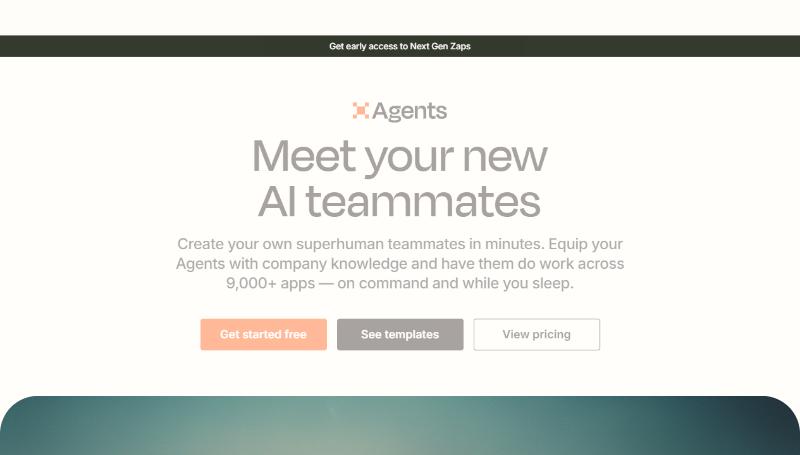
Most money in a B2B sales team isn’t lost in negotiation. It’s lost in the gaps between systems: the web form nobody saw, the quote nobody chased. A normal Zap does one fixed thing when something happens. A Zapier Agent is given a goal, works out the steps across your apps, and can be told to stop and ask before doing anything important. I’ll skip the feature list. Here are three agents worth building.
Image: Zapier, from the official Zapier Agents page
Play 1: Answer web leads in five minutes, not five hours
The money: web enquiries that go cold while they wait. The first sensible reply often wins.
How I’d run it:
- Give the agent a goal: “When a website enquiry arrives, look up the company, score it against our ideal customer description, create or update the CRM record, assign it to the right rep by region, and alert that rep with a one-paragraph summary.”
- Turn on human approval for the CRM write for the first two weeks.
- Measure the time from enquiry to first human reply, before and after.
The maths, as an example: if faster replies turn even two extra enquiries a month into quotes, at a 25% win rate and a $20k average job, that’s about $120k a year in expected revenue.
Play 2: Follow up every quote without anyone remembering to
The money: quotes that go quiet and are never chased because the rep got busy.
How I’d run it:
- Goal: “When a deal has been in the quote stage for 7 days with no reply, draft a follow-up referencing the quote details and send it to the rep for approval.”
- The rep approves, edits or rejects. Nothing goes to the customer unseen.
- At 14 days with no reply, alert the sales manager.
Play 3: Keep the CRM clean while you sleep
The money: time wasted on duplicate records, dead contacts and deals with no owner, plus the bad decisions made from a messy pipeline.
How I’d run it: run a weekly agent that finds likely duplicates, deals with no owner and deals with a close date in the past, and posts the list to the sales channel for a human to fix. Let it flag, not fix, until you trust it.
How I’d actually do it
Start with Play 2. Chasing quotes is the most valuable habit in technical sales and the one that slips first. Play 1 is next if you get regular web enquiries.
The caveat: an agent given a vague goal does vague things. Write the goal as precisely as you’d brief a new hire, keep human approval on anything that touches customers or CRM records, and use the built-in AI Guardrails, which scan for personal data and prompt-injection attempts.
Where this fits
If you already use Make.com, the same plays work there with more manual setup. For drafting the follow-up itself, see drafting CRM follow-ups with AI. Automation only helps if stages and ownership are clear, which is the work of CRM Pipeline Rescue.
What shipped, for reference: Zapier Agents are generally available with enterprise controls, including AI Guardrails (scanning for personal data, prompt injection and harmful content), memory across runs, human-in-the-loop approval, and access to 9,000+ connected apps.
Source: Zapier.