Outbound rarely fails all at once. It fails a little every week: a sequence with a 1% reply rate that nobody looks at, a new market everyone talks about and nobody prospects. Apollo’s AI Assistant can now run multi-step jobs and remember what you told it last time. I’ll skip the release notes. Here are three plays that turn that into booked meetings.
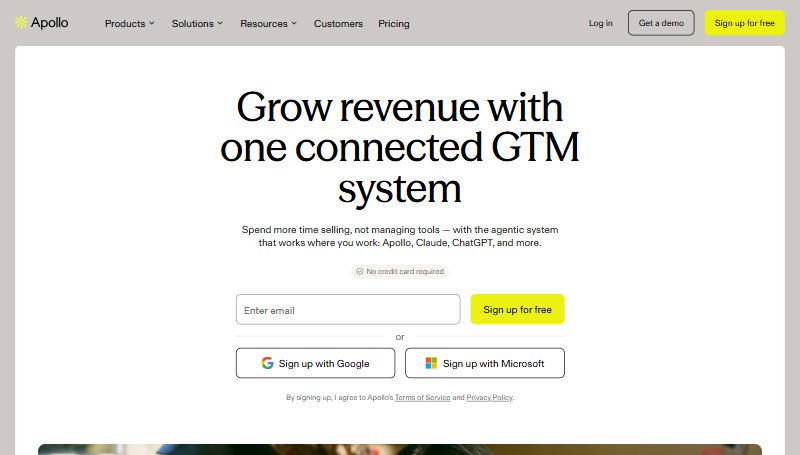
Image: Apollo.io, from the official Apollo release notes
Play 1: Fix the sequence that’s quietly failing
The money: a sequence that’s still sending, still costing you sender reputation and attention, and producing almost nothing.
How I’d run it:
- Find your worst-performing active sequence by reply rate.
- Ask the Assistant: “Analyse this sequence’s open, reply and interested rates by step. Where’s the drop-off, and what would you change in the subject lines, the call to action or the targeting?”
- It shows a before-and-after comparison and won’t change a live sequence without your approval. Read it, keep what makes sense, approve.
- Give it two weeks and compare.
The maths, as an example: 1,000 contacts at a 1% reply rate gives you 10 replies. Lift that to 2% and it’s 20. If one in five replies becomes a meeting and one in four meetings becomes a $20k job, the extra ten replies are worth roughly $10k. Your numbers will differ; the point is that small rate changes on a big list add up.
Play 2: Open a new market in one afternoon
The money: a vertical or region everyone says you should be selling into, that never gets prospected because the research is tedious.
How I’d run it:
- Give the Assistant one compound goal: “Find packaging manufacturers in Victoria with 50 to 250 employees, find the operations or engineering manager at each, enrich their contact details, and draft a first email about reducing changeover time.”
- Because it now chains steps and remembers your earlier instructions, you don’t have to run three tools by hand.
- Rewrite the first draft in your own voice, then use it as the template for the rest. Send to 30, not 300. Learn from the replies before you scale.
Play 3: Answer inbound emails while they’re still warm
The money: inbound enquiries that wait hours for a reply because the rep has to look up who the person is first.
How I’d run it: if your team uses Superhuman, Apollo now works inside Superhuman Go. Look up the sender and their company without leaving the inbox, push the contact into Apollo, and reply in minutes instead of after lunch. Speed of reply on inbound is one of the few things in sales that’s entirely in your control.
How I’d actually do it
Start with Play 1. Every team has a failing sequence, and fixing one costs nothing but an approval. Play 2 is where the new revenue comes from, but only once your sequences are healthy enough to be worth copying.
The caveat: multi-step agents interpret goals more broadly than you meant. Keep the approval step on, and write goals as precisely as you’d brief a new hire. “Find me some leads” gets you some leads.
Where this fits
For deeper enrichment and research signals, Clay goes further. For the research brief before the first call, use Perplexity Deep Research. Meetings booked into a pipeline with no follow-up discipline still leak, which is the work of CRM Pipeline Rescue.
What shipped, for reference: Apollo’s AI Assistant now keeps memory across conversations, chains multi-step tasks (prospecting, enrichment, sequences, analysis) and can run them in parallel. Sequence analysis suggests changes with a before-and-after preview and needs approval to go live. Apollo also works inside Superhuman Go.
Source: Apollo.io.