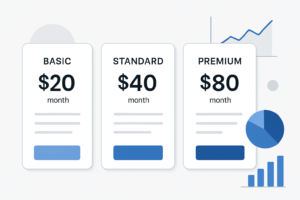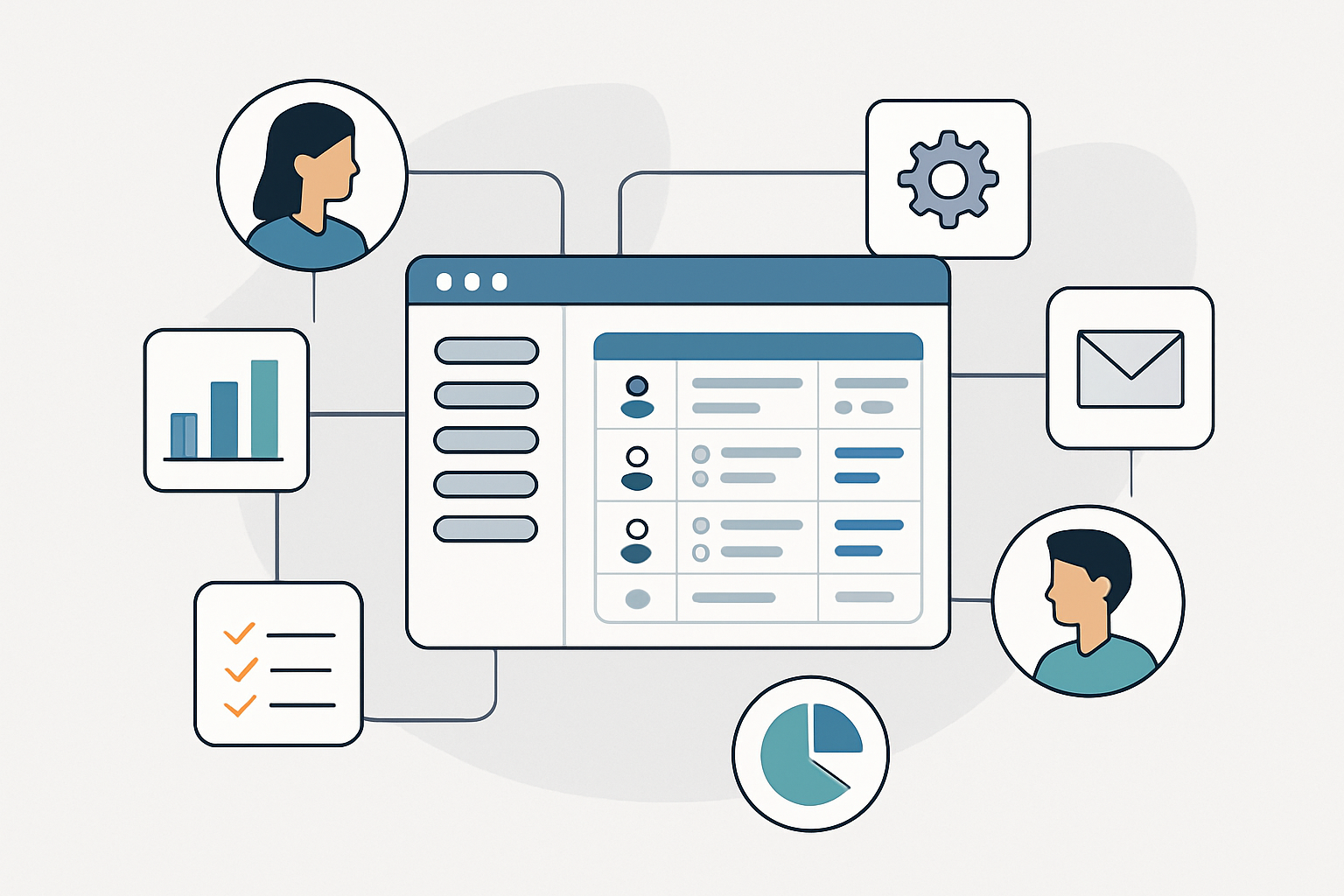
Choosing the best CRM for B2B sales in 2026 comes down to one question: will your team actually use it? We compared the leading B2B CRM tools — Pipedrive, HubSpot, Salesforce, Zoho and Apollo.io — on real usability, pricing and pipeline visibility, not just feature checklists. Here is our ranked verdict, followed by an in-depth look at each.
Free interactive tool
Not sure which of these fits your team? Answer 5 quick questions and get a ranked recommendation in under a minute.
Best B2B CRM Tools for 2026 (Ranked)
How We Rated These B2B CRM Tools
Most “best CRM” lists rank on feature counts. That is the wrong test. A CRM with 400 features that your reps quietly stop updating is worth less than a simple one they actually keep clean. So we scored every platform on the five things that decide whether a B2B CRM succeeds or fails in the real world — weighted by how much each one actually predicts success.
| Scoring criterion | Weight | What we are actually testing |
|---|---|---|
| Pipeline visibility | 30% | Can a sales manager see every live deal, its stage and its risk in one screen, without building a report first? |
| Adoption & rollout | 25% | How long until reps use it unprompted? This is the single biggest predictor of whether a CRM investment pays back. |
| Automation & integrations | 20% | Auto-logging of email and calls, lead routing, follow-up triggers, and how well it connects to the rest of the stack. |
| Reporting & forecasting | 15% | Pipeline reports, conversion rates by stage, and whether the forecast is trustworthy enough to run the business on. |
| Value for money | 10% | Total cost of ownership — licences plus admin time — not just the sticker price per seat. |
B2B CRM Scorecard 2026
Scores are out of 10. The overall score is the weighted average of the five criteria above.
| CRM | Pipeline | Adoption | Automation | Reporting | Value | Overall |
|---|---|---|---|---|---|---|
| 🏆 Pipedrive | 9.5 | 9.5 | 7.0 | 7.5 | 9.0 | 8.7 |
| HubSpot | 8.5 | 8.5 | 9.5 | 9.0 | 6.0 | 8.5 |
| Salesforce | 8.0 | 5.0 | 9.5 | 10.0 | 4.0 | 7.5 |
| Apollo.io | 7.0 | 7.5 | 8.0 | 7.0 | 8.0 | 7.4 |
| Zoho CRM | 7.0 | 6.5 | 8.0 | 7.5 | 9.5 | 7.4 |
What the scores actually tell you: the top three are separated by around one point, which means there is no single “best” CRM — there is a best CRM for your constraint. Pipedrive wins overall because it scores highest on the two heaviest-weighted criteria (pipeline visibility and adoption), which is what most small-to-mid B2B teams are actually failing at. HubSpot is within touching distance and overtakes Pipedrive the moment marketing automation becomes a real requirement. Salesforce posts the best reporting score in the market and the worst adoption score — that trade is the entire Salesforce story, and it only pays off with a dedicated admin.
HubSpot
HubSpot remains a top contender for B2B businesses in 2026, offering a potent combination of CRM, marketing automation, and sales functionalities. Its integrated platform allows teams to streamline customer interactions, manage pipelines, and drive deals efficiently.
What small B2B teams like about it:
- All-in-one platform for marketing and sales.
- Extensive integration options.
- Robust analytics for data-driven decisions.
What it doesn’t do: May become costly with added features as teams grow.
Price: Starts at $50/month.
Best for: Growing small teams ready to integrate marketing and sales strategies.
Our score: 8.5/10. Loses ground only on value — the jump from free to Professional is the steepest price cliff in this comparison, and it usually arrives right when you have become dependent on the platform.
Pipedrive
If your team’s focus is on boosting windows of opportunity in sales, Pipedrive’s visual pipeline management is unmatched. It puts you right in control, offering an overview that simplifies and speeds up the sales process.
What sales founders like about it:
- Easy tracking of sales progress.
- Streamlined user interface with minimal learning curve.
- Customizable dashboards and workflows.
What it doesn’t do: Lacks deep marketing functionalities directly within its core offering.
Price: Starts at $15/user/month.
Best for: Sales-focused teams needing a powerful selling tool.
Our score: 8.7/10 — highest overall. Pipedrive wins because it is strongest exactly where most B2B teams are weakest: reps keep it up to date without being chased, so the pipeline stays honest. It gives up points on automation depth, which is a fair trade at this price.
Salesforce
Salesforce’s catchphrase— “No software, only solutions”— speaks to its dominance in the market. For enterprises needing extensive customization and scalability, Salesforce offers unrivaled power and flexibility.
What BDMs like about it:
- Unmatched customization potential.
- Huge ecosystem of apps and integrations.
- AI-driven insights for smarter business decisions.
What it doesn’t do: Can be overwhelming without proper onboarding, especially for smaller teams.
Price: Custom pricing based on user needs and scales.
Best for: Large enterprises with complex CRM needs.
Our score: 7.5/10. Best-in-market reporting (10/10) dragged down by the worst adoption score here (5/10). Salesforce is the right answer when you have a dedicated admin and genuinely complex process — and an expensive wrong answer when you do not.
Zoho CRM
Zoho CRM sits comfortably in a niche targeting startups and budget-friendly teams. It offers a scalable platform that grows with your business without breaking the bank.
What small teams like about it:
- Highly affordable entry point.
- Plenty of third-party integrations.
- User-friendly interface for quick adoption.
What it doesn’t do: Not as comprehensive in premium features as some high-brow competitors.
Price: Starts at $12/user/month.
Best for: Budget-conscious startups looking for scalability.
Our score: 7.4/10. Top value score in the comparison (9.5/10). What it costs you back is adoption — the interface asks more of your reps than Pipedrive or HubSpot do, so budget for a slower rollout.
Apollo.io
Apollo.io stands apart for its seamless integration of CRM with sales intelligence and prospecting tools, ideal for those looking to supercharge their data-driven strategies.
What data-driven teams like about it:
- Rich data on prospects for smarter targeting.
- Seamless usability with clear interfaces.
- Frequent updates with community-driven improvements.
What it doesn’t do: Primarily sales-centric, may require third-party software for complete marketing functionalities.
Price: Starts at $39/user/month.
Best for: Data-driven sales teams needing integrated intelligence tools.
Our score: 7.4/10. Scored as a CRM, which slightly undersells it — Apollo is really a prospecting engine with CRM attached. If your bottleneck is finding and reaching the right accounts rather than managing deals already in play, it outperforms this score.
Biggest Mistakes When Choosing a CRM
Ignoring Scalability
Choosing a CRM that fits your current needs without considering future growth can lead to high transition costs later. Plan for scalability right from the start to ensure your CRM grows with your business.
Not Involving the Team
Engaging only top management in CRM selection can lead to poor adoption. Ensure all critical users’ needs are included in the selection process for better buy-in and utility.
Overlooking Data Security
With data breaches on the rise, it’s crucial to select a CRM system that prioritizes data security and complies with relevant regulations.
Underestimating Integration Needs
Failing to evaluate integration capabilities with your current tools can lead to inefficiencies and missed opportunities for automation.
Frequently Asked Questions
What are the best CRM tools for B2B sales in 2026?
The best CRM tools for B2B sales in 2026 are Pipedrive, HubSpot, Apollo.io, Zoho CRM and Salesforce. Pipedrive is the best overall pick for most small-to-mid B2B sales teams because of its clear visual pipeline and fast adoption. HubSpot is the strongest choice if you need marketing automation built into the same platform, Apollo.io wins when prospecting and contact data matter most, Zoho CRM is the best budget option, and Salesforce is the right fit for enterprise teams that need deep customization.
What is the primary purpose of a B2B CRM?
A B2B CRM helps businesses manage and improve customer relationships, streamline processes, and increase profitability by organising and automating communication and tracking.
How do I know what CRM is right for my business?
Consider your business size, industry-specific needs, budget, and future growth plans to determine the CRM that aligns with your objectives and the tools you already use.
Is it essential to have integration options in a CRM?
Yes. Robust integration options ensure your CRM can connect with other tools and systems for a seamless workflow and better productivity.
Can a CRM improve our customer service?
Yes. A proper CRM improves customer service by managing customer interactions and giving support teams the information needed to resolve concerns efficiently.
What is the best CRM for B2B sales in 2026?
For most small-to-mid B2B sales teams, Pipedrive is the best overall CRM in 2026 — it has the clearest visual pipeline and the highest day-to-day adoption. HubSpot is the stronger all-in-one if you need marketing automation built in, and Apollo.io wins when prospecting data matters most.
How much does a B2B CRM cost in 2026?
Entry B2B CRM pricing in 2026 typically runs about $12–$50 per user per month. Zoho starts around $12, Pipedrive around $15, Apollo around $39 and HubSpot around $50 per month; Salesforce is custom-priced and usually the most expensive.
Is Pipedrive better than HubSpot for B2B?
For sales-focused B2B teams, Pipedrive is usually easier to adopt and cheaper per seat. HubSpot is the better fit if you want marketing and sales in one platform. Many teams start on Pipedrive and add HubSpot later as their marketing scales.
What is the best CRM for a small B2B team?
Small B2B teams do best with a CRM that is quick to set up and easy to keep clean. Pipedrive and Zoho are the two most popular picks in 2026 for teams under 20 people.
Which B2B CRM tools have the best reviews in 2026?
On our own scoring, Pipedrive rates highest at 8.7/10, followed by HubSpot at 8.5/10, Salesforce at 7.5/10, and Apollo.io and Zoho CRM tied at 7.4/10. Pipedrive and HubSpot also consistently earn the strongest user reviews among small-to-mid B2B teams, mostly because reps actually adopt them. Salesforce reviews are more polarised: teams with a dedicated admin rate it highly, while teams without one frequently report it becoming an expensive database nobody maintains.
What is the best CRM for B2B startups in 2026?
For most B2B startups, the best starting point is HubSpot’s free tier or Pipedrive at around $15/user/month. Both get you a working pipeline in a day rather than a quarter. Start on HubSpot free if you expect marketing and content to drive your early pipeline; start on Pipedrive if you are outbound-led and want the cleanest deal tracking. Avoid Salesforce at startup stage — the admin overhead will cost you more than the licences.
What is the best B2B CRM platform for a small sales team?
For a small B2B sales team of roughly 2 to 20 reps, Pipedrive is the best overall platform in 2026. It scores 9.5/10 on both pipeline visibility and adoption in our scoring, which are the two factors that decide whether a small team’s CRM survives contact with reality. HubSpot is the better pick if the same small team also owns marketing, and Zoho is the strongest option if budget is the binding constraint.
Where can I compare B2B CRM ratings, like on Capterra?
You can cross-check ratings on Capterra, G2 or TrustRadius alongside a guide like this one. On Capterra, Pipedrive, HubSpot and Zoho all typically sit in the high 4-star range with thousands of reviews, while Salesforce and Apollo.io score slightly lower on ease of use but higher on depth of features. Third-party review sites are useful for volume of opinion; a scored comparison like ours is useful for weighing what actually predicts adoption for a B2B sales team.
What is the best B2B CRM software in 2026?
The best B2B CRM software in 2026 is Pipedrive for most small-to-mid sales teams, based on pipeline visibility and adoption. HubSpot is the strongest all-in-one software if marketing and sales need to share one platform, Zoho CRM is the best-value software for budget-conscious teams, and Salesforce remains the deepest enterprise-grade software for teams with a dedicated administrator.
What is the best B2B CRM platform in 2026?
Pipedrive is the best overall B2B CRM platform in 2026 on our scoring (8.7/10), narrowly ahead of HubSpot (8.5/10). Which platform is actually best for you depends on whether marketing automation, prospecting data, or enterprise customization is your binding constraint — see the scorecard above for the full breakdown by criterion.
Which CRM Should You Choose?
You’re a solo operator → Zoho CRM offers budget-friendly options without compromising essential features, making it an excellent choice for one-person operations.
Your team is sales-focused → Pipedrive enables clear visualization and management of opportunities and pipelines, ideal for sales-driven teams.
You’re managing enterprise-level processes → Salesforce’s extensive customization and robust platform cater to large-scale needs, making it the go-to for enterprise functionalities.
Aim for data-driven sales strategies → Apollo.io seamlessly integrates sales intelligence to power data-driven decisions and strategies.
Ready to Get Started?
Explore the right CRM for your business and watch your relationships flourish. Visit our contact page for tailored advice or check out our guides section for more insights on leveraging CRMs for maximum impact.
🏆 Our Top Pick
Try Pipedrive Free for 14 Days
No credit card required. Full access. Cancel anytime.
Related Reading
- → The 2026 B2B CRM & Pipeline Benchmark Report (original data)
- → Pipedrive Pricing Breakdown: Which Plan Do You Actually Need?
- → Apollo.io vs Pipedrive: Which Should B2B Teams Set Up First?
- → Make.com Review: Automate the Workflows Your CRM Can’t Handle Alone
- → Best CRM for B2B SaaS Companies (2026)
- → Best CRM for Flooring & Tiling Businesses (2026)
↑ Part of our CRM guide library — see all CRM guides.
Cost breakdowns to read alongside this comparison: Apollo.io pricing in 2026 and HubSpot free CRM limits.
Pipedrive gives the best balance of usability and pipeline visibility for small-to-mid B2B teams.
Try Pipedrive free →